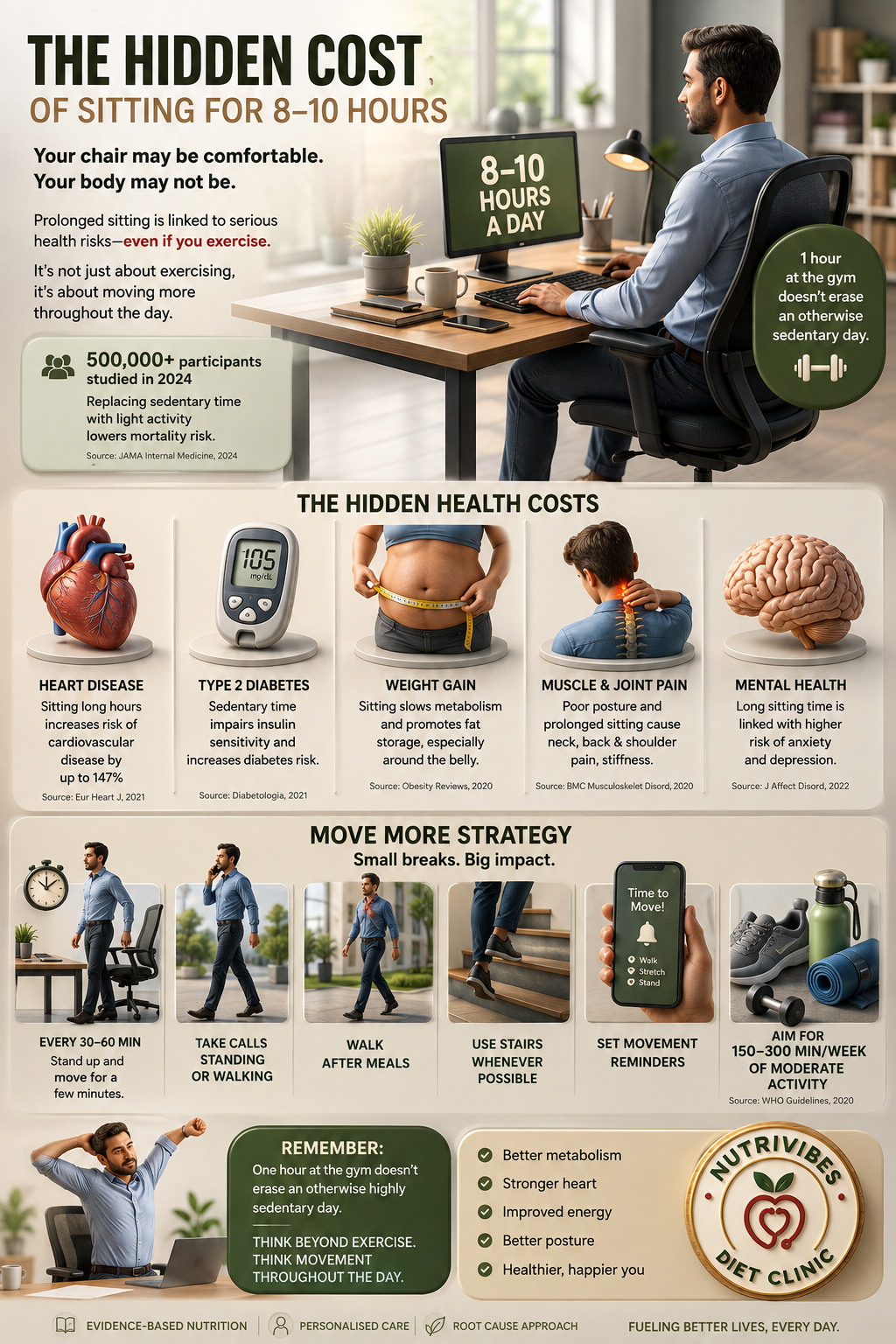
The Hidden Cost of Sitting for 8–10 Hours a Day
Your chair may be comfortable.
Your body may not be.
For many professionals, 8–10 hours of sitting have quietly become part of the workday—followed by sitting in the car, on the sofa, and during screen time at home.
The concern isn't simply “not exercising enough.”
Prolonged sedentary time itself matters.
Research links higher sedentary behavior with increased risk of cardiovascular disease, type 2 diabetes, some cancers and premature mortality.
And here's the important part:
You don't have to become a gym enthusiast to start moving more.
A 2024 study using data from more than 500,000 participants found that replacing sedentary time with physical activity was associated with lower mortality risk—even when the replacement activity was relatively light.
Try this “MOVE MORE” workday strategy:
🔹 Every 30–60 minutes: stand up and move for a few minutes.
🔹 Take calls standing or walking whenever possible.
🔹 Walk after meals instead of immediately returning to your chair.
🔹 Use stairs for short distances.
🔹 Set a movement reminder on your phone or smartwatch.
🔹 Aim for 150–300 minutes of moderate physical activity/week, as recommended by WHO.
And remember:
One hour at the gym doesn't completely erase an otherwise highly sedentary day.
Think beyond “exercise.”
Think movement throughout the day.
Your metabolism, circulation, muscles and cardiovascular system were designed for movement—not 8 hours of uninterrupted sitting.
Don't wait for your body to ask for movement. Build movement into your routine.
Small movement breaks. Repeated consistently. Big difference over time.
— Dt. Archana Goyal
Clinical Dietitian | Functional Nutritionist
Nutrivibes Diet Clinic
#SedentaryLifestyle #HealthAtWork #MovementMatters #PreventiveHealth #MetabolicHealth #HeartHealth #HealthyWorkplace #NutritionAndHealth #ClinicalNutrition #LifestyleMedicine #EvidenceBasedNutrition #Nutrivibes